
I give every participant in my programs a free pass to call me if they’re struggling with a workplace relationship issue. The other day, while driving north from North Bay to Cochrane for work—along a beautiful stretch of remote highway lined with lush forest and crystal-clear blue lakes—the phone rang.
A participant from a previous training program needed guidance. She no longer felt safe working with an employee she supervised because of his verbal abuse—outbursts, rage, name-calling—and she wasn’t convinced that her manager, the owner of the establishment, was going to provide the support she needed. In her mind, termination was the only option.
As she spoke, I realized that her solution was right in front of me—literally and metaphorically. The guardrails on the highway, around corners and over bridges, kept my vehicle and me safe while still allowing me to move forward efficiently. With keen listening and my eyes on the road, I began to see the structural and ideational issues in the conflict that were foundational to the breakdown of the interpersonal relationship.
When Guardrails Are Missing
In decades of workplace relationship and conflict management experience, I’ve learned to look beneath the symptoms and dig for root causes. In this case, the root cause was as crystal clear as the blue lakes I was passing.
The employee was not accountable for his roles and responsibilities. Was he ever truly clear on them? That was still to be determined. What was clear was that he hadn’t been performing to his supervisor’s expectations since he started. He was “less-than-coachable,” my generous term for people who think they know it all or resist guidance.
The supervisor didn’t know how to get through to a new employee who didn’t want to be coached or advised, so she picked up the slack for his performance issues for quite some time, quietly building resentment about his poor work.
Performance management is like guard rails on the highway. When we have guidelines, policies, job descriptions, checklists—or whatever is right for the role—we can measure behaviour against those guidelines and hold people accountable for what’s expected. Without guard rails, everyone is one distraction away from a dangerous drift.
Rumble Strips And Timely Feedback
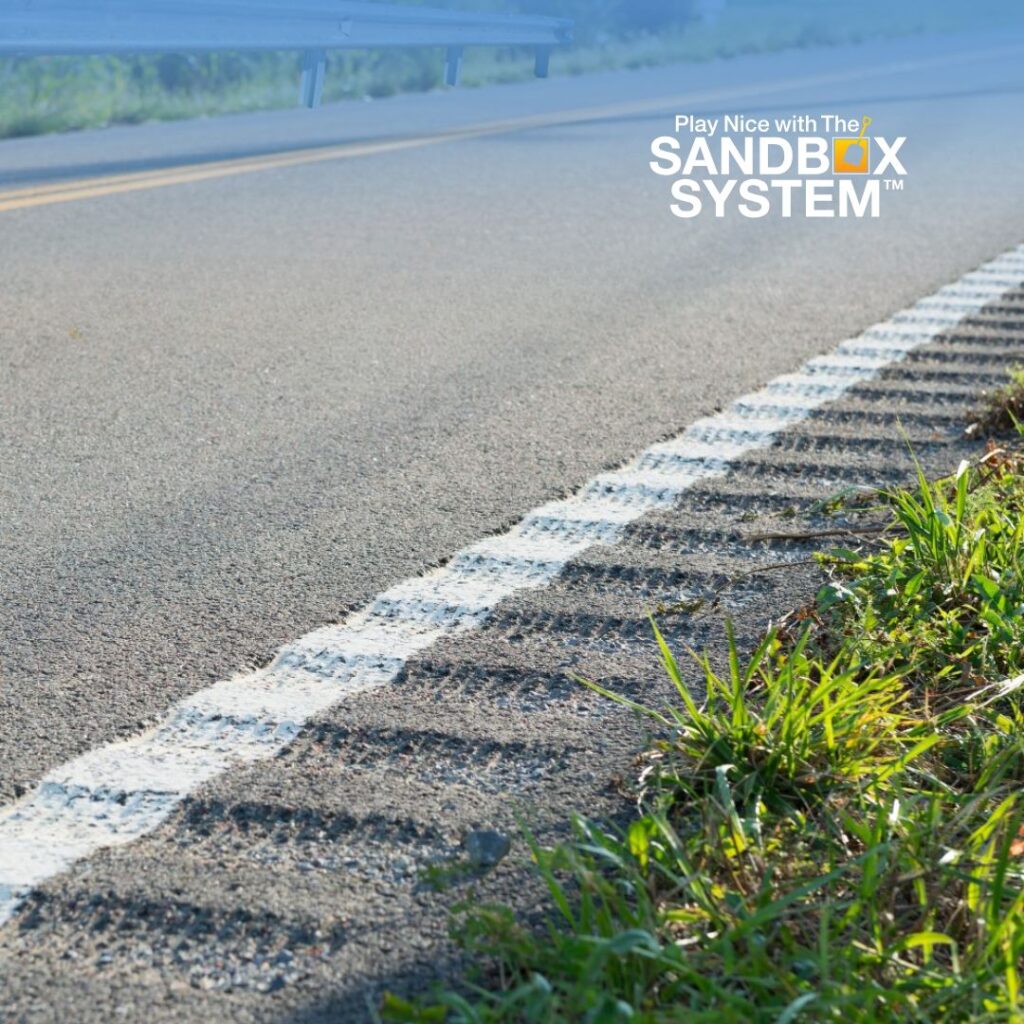
If you’ve driven secondary highways in Ontario, you’ve probably crossed the line and heard immediate feedback: Gwaak Gwaak Gwaak Gwaak—you’re heading for danger on the wrong side of the road, get back in your lane!
Coaching, guidance, and performance correction should work the same way. Feedback needs to be timely, helping employees stay within the lines of the roles and responsibilities they’re accountable for. Feedback that arrives next week, next month, or at performance review time isn’t safe enough; by then, the vehicle may already be in the ditch.
As this supervisor listened to my unpacking of the problem, using the very highway I was driving on as a metaphor, she began to see how the safety equipment and technology laid out for us—guard rails and rumble strips—mirror the systems we need in workplaces to move swiftly and safely toward our destinations.
Owning Our Part In The Conflict
In every conflict, we need to take responsibility for what we’ve done—or not done—that contributed to the problem. For her, it became clear that, early in supervising this new employee, she hadn’t consistently provided clear direction, feedback, and course correction to align with his job description and requirements, and neither had the other supervisors.
So when tension built up on a busy shift, her demands for his performance came out short, curt, and non-negotiable. To the employee—who had been enabled to underperform for over a year—this felt illogical, unfair, and injurious. Yet what she was really doing was guiding him toward an acceptable performance standard that he had not previously been held to.
His response—rage, irrational lashing out, name-calling, yelling, and intimidating body language—is never a good option. I’m not sure whether he will still have a job after the manager becomes fully involved.
Leadership’s Role In Safety
The establishment’s manager plays a critical role. Protecting the physical and psychological safety of supervisors and employees alike is crucial. At the leadership level, rules of engagement and accountability must be clear. People need to know:
– What is expected of them
– Who has the authority to manage and hold people accountable
– What discipline strategy is used when someone crosses the line—verbal and written warnings, suspensions, or terminations—and that consequences are implemented quickly and fairly
These foundations keep everyone moving swiftly and safely in any establishment.
I’m looking forward to her follow-up call, because I hold my clients accountable for fixing their problems—“smoothing the sand,” as I call it in my Sandbox System™.
Do you use guard rails and rumble strips effectively with the people you manage? If you need some help, give me a call—chances are I’ll be driving somewhere on one of our beautiful highways, heading to or from my next group session.
Best,
Penny
P.S. Are you ready to lead with more confidence and less conflict? Join Penny’s Live Public Cohort and strengthen your ability to handle difficult conversations, build trust, and create a healthier team culture. We offer both in-person and virtual options; dates are listed below.
Public Cohort 4 – Virtual via Zoom
September 18th & October 8th, 2026
Public Cohort 5 – North Bay, Ontario
September 17th & October 7th, 2026
Enrolment is now open